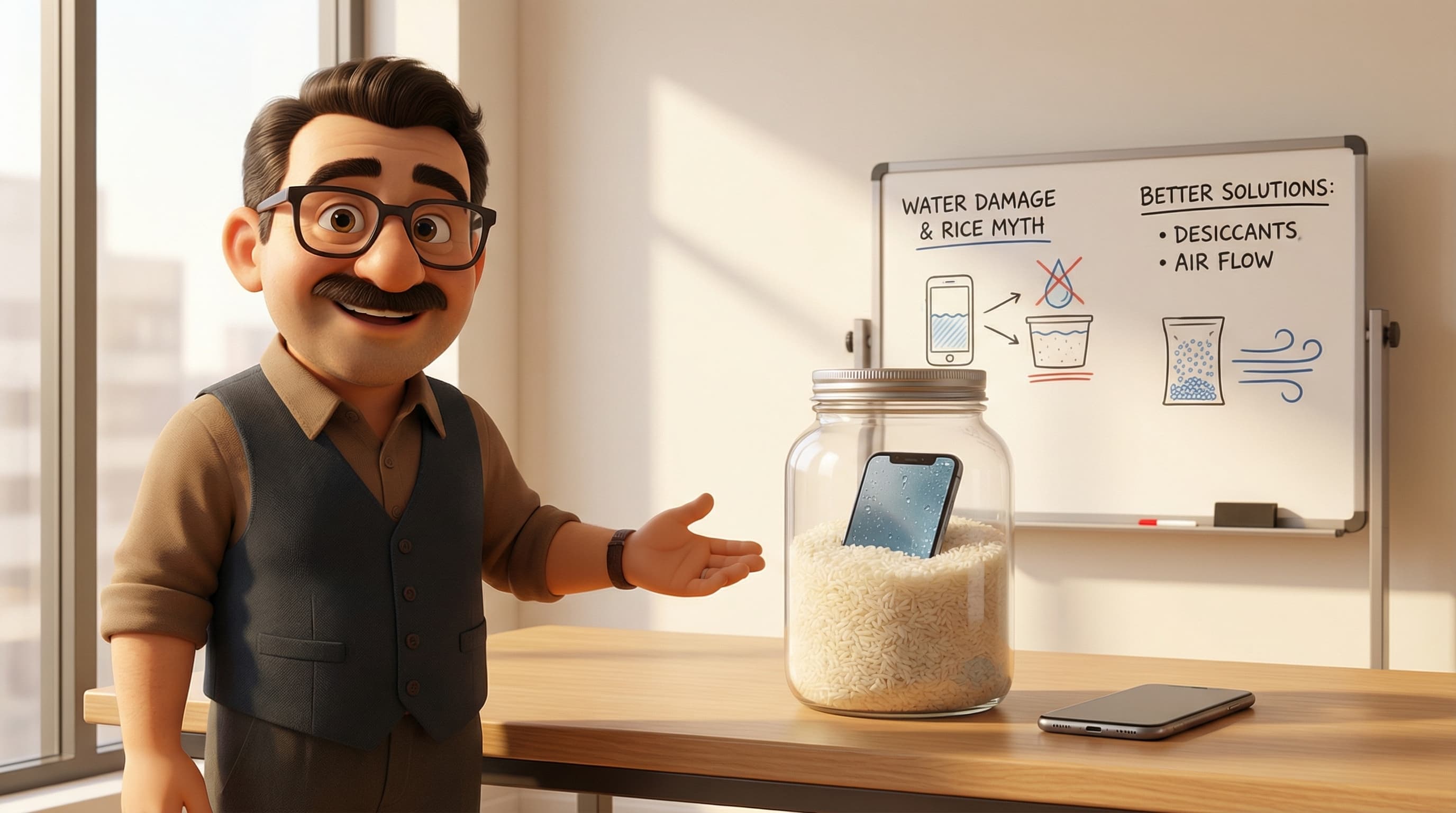
The Great Rice Rescuer: Legend, Myth, or a Recipe for Disaster?
Picture the scene: You’re at the local, enjoying a well-earned pint on a Friday evening. You reach for your phone to show your mate a photo of your dog, and—as if guided by the cruel hand of Sod’s Law—it slips. Time seems to slow down as your beloved device tumbles through the air and lands with a heart-breaking plop right into a puddle (or worse, a pint of lager).
Panic sets in. You fish it out, frantically wiping it on your jumper. Then, someone chirps up with the age-old wisdom: "Quick! Get it in a bag of rice!"
We’ve all heard it. It’s the grandmother’s remedy of the technology world. From London to Liverpool, the collective belief is that a bag of uncooked Basmati is a magical hospital for drowning electronics. But before you go raiding the kitchen cupboard and burying your £800 smartphone in grains, we need to have a serious chat.
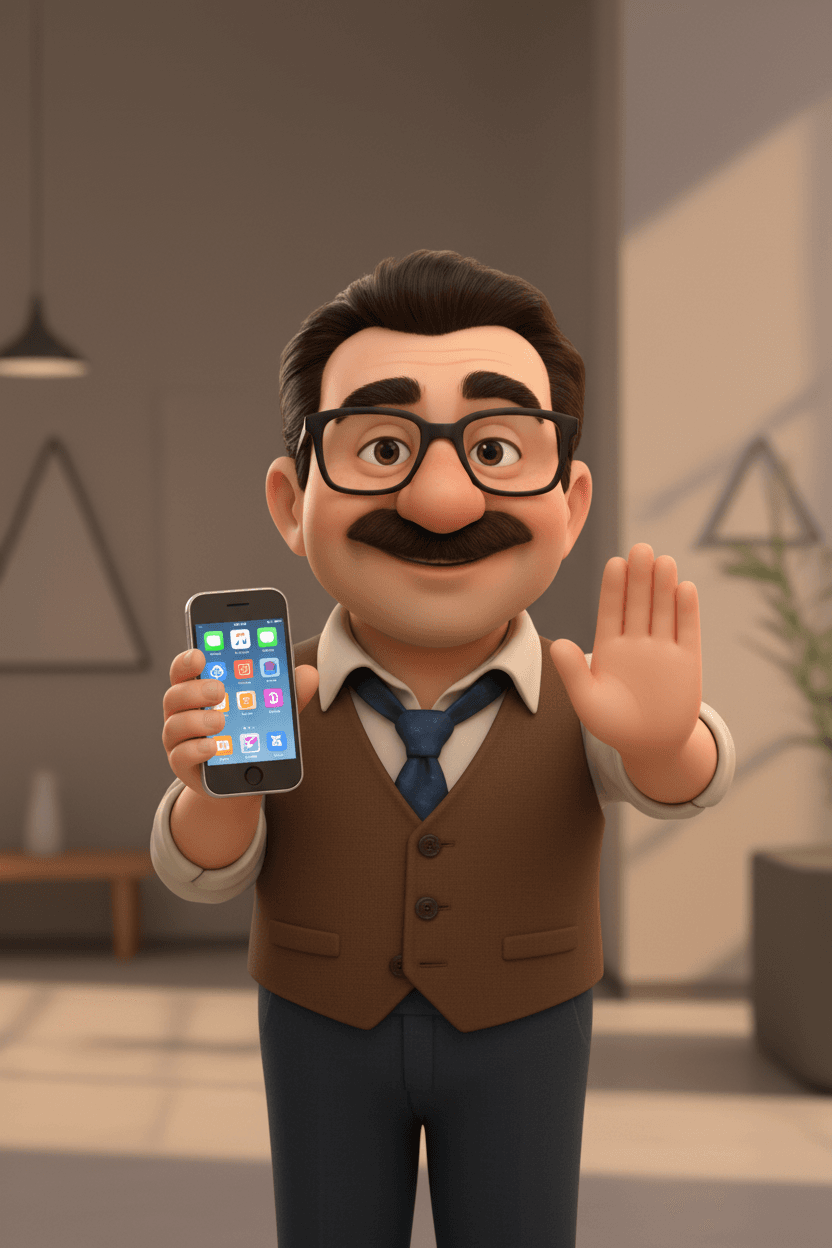
I’m Tod, your friendly guide through the often confusing jungle of consumer tech, and today we’re going to bust one of the biggest myths in the industry. Grab a cuppa (keep it away from your phone, mind), and let’s find out if rice is actually a saviour or a silent killer.
The Myth: Why Do We All Believe It?
It’s fascinating how deeply this belief is ingrained in our culture. It feels intuitive, doesn’t it? Rice absorbs water when you cook it—it fluffs up and soaks in all that lovely moisture. Therefore, logic dictates that if you surround a wet phone with dry rice, the grains will act like tiny sponges, sucking the moisture right out of the charging port and saving the day.
It’s a comforting thought. It gives us something to do in a moment of helplessness. Instead of just staring at a blank screen, we feel proactive. We’re taking action! We’re doctors performing a transplant! We pop it in a Tupperware box, seal the lid, and cross our fingers.
But here is the uncomfortable truth: intuition isn't science. While rice is indeed hygroscopic (a fancy word for water-absorbing), it’s actually terribly inefficient at pulling moisture out of the air at room temperature. But if it’s so rubbish, where on earth did this idea come from?
A Trip Down Memory Lane: When Rice Actually Made Sense
Believe it or not, this wasn't always complete balderdash. There is a kernel (pun intended) of historical truth here.
The origins of using household items as desiccants go way back to the mid-20th century. I did a bit of digging, and as far back as 1946, photography magazines were suggesting that photographers working in humid tropical climates could use tea, brown paper, or rice to keep their film dry. Back then, preventing fungus on lenses was the main game.
Fast forward to the late 90s and early 2000s—the golden era of the Nokia brick. Do you remember the Nokia 3310? Built like a tank, battery life that lasted a week, and crucially, it was not a sealed unit. If you dropped that phone in the sink, the standard procedure was to pop the back off, take out the battery, and disassemble the thing into a few pieces.
In this specific scenario, the rice method had a fighting chance. By taking the phone apart, you were exposing the internal circuitry to the air. Putting these separated components in a bowl of rice allowed for airflow around the board. The rice wasn't doing much of the heavy lifting—the fact that you’d opened the device up and let it sit for two days was the real hero—but the rice got the credit. It was a case of correlation, not causation.
But technology has moved on, and sadly, our home remedies haven’t kept up.
The Modern Reality: Why Rice is Now Public Enemy No. 1
Let’s look at the smartphone in your pocket right now. Whether it’s an iPhone, a Samsung Galaxy, or a Pixel, it is a sleek slab of glass and metal. It’s a sealed unibody. You can’t just whip the back off and remove the battery unless you have a heat gun and a degree in engineering.
This fundamental design shift changes everything.
1. The Barrier Problem
When you bury a modern, sealed phone in rice, the grains are only touching the glass exterior. They can’t get anywhere near the internal motherboard where the water is causing havoc. You are essentially drying the outside of the phone while the inside marinates in liquid. It’s about as useful as drying your hair by wearing a towel over a helmet.
2. The "Starch Dust" Horror Show
This is the part that really makes my circuits shudder. Commercial white rice is coated in a fine layer of starch dust. You know that milky white water you get when you rinse rice before cooking? That’s the stuff.
When you shove a wet phone into a bag of rice, that dust gets into the charging port, the headphone jack (if you’re lucky enough to still have one), and the speaker grilles. When that starch dust meets the liquid inside your phone, it forms a sticky, glue-like paste—a slurry, if you will.
As this paste dries, it hardens like cement. I’ve chatted with repair technicians who have opened up phones that might have survived the water damage, only to find the charging port completely impacted with hardened rice starch. It can ruin the connectors and block the microphones. In trying to save the phone, you’ve actually introduced a second, stickier foreign contaminant.
3. Corrosion is the Real Killer
Here is the technical bit. Water itself isn't the only enemy; it’s the minerals in the water. When tap water, rain, or (heaven forbid) toilet water touches active electronics, it causes electrolysis. This leads to corrosion—rust, essentially.
Rice does absolutely nothing to remove these minerals. Even if the rice miraculously dried the phone, the mineral residue remains on the motherboard. As soon as you turn the phone back on, electricity hits those minerals, causes a short circuit, and fizz—it’s game over. It’s a slow death, too. The phone might work for a week, and then suddenly die a month later as the corrosion spreads.
The Verdict from the Big Guns
You don’t just have to take my word for it. In 2024, Apple finally had enough of the carnage and updated their official support documentation. They explicitly state: "Don't put your iPhone in a bag of rice. Doing so could allow small particles of rice to damage your iPhone."
When the manufacturer tells you to stop doing it because it breaks their kit, it’s probably time to listen.
Common British Misconceptions (What Not To Do)
Before I tell you how to actually fix a wet phone, let me quickly stop you from trying these other "clever" ideas I often hear bandied about in the UK:
- The Airing Cupboard / Radiator: "I’ll just pop it on the radiator to dry it out." Please don't. Lithium-ion batteries hate heat. Putting your phone on a radiator can cause the battery to swell or even catch fire. Plus, heat softens the adhesive seals that keep the phone water-resistant, making the problem worse.
- The Hairdryer: This seems logical, but blowing air at high velocity onto the phone just pushes the water droplets deeper past the seals and into the sensitive components. You’re forcing the water where it wasn’t going to go on its own.
So, What Should You Actually Do?
Right, enough doom and gloom. If you’ve just dropped your phone in the sink, here is the Tod-approved action plan. No magic, just physics.
- Retrieve it Immediately: Every second counts. Get it out of the liquid.
- Power Down: Do not press buttons to check if it works. Turn it off immediately. Electricity + Water = Short Circuit. Cutting the power is your best chance of survival.
- The Tap Test: Hold the phone with the connector ports (charging hole) facing down. Gently tap the phone against your hand to dislodge excess liquid. You want gravity to help the water fall out, not seep in.
- Airflow is King: Place the phone in a dry area with good airflow. A gentle fan blowing across the phone (not directly into the ports) is ideal. The goal is to encourage evaporation.
- Patience: This is the hardest part. You need to leave it alone for at least 24 to 48 hours. Do not charge it. Do not turn it on "just to check." If there is still moisture inside and you send power through it, you will fry it.
A Note on Silica Gel: You know those little packets that come in shoe boxes that say "DO NOT EAT"? Those are silica gel, and they are legitimate desiccants. They absorb water much faster than rice and don't create dust. If you happen to have a load of these saved up in a drawer (who doesn't?), using them is infinitely better than rice. But honestly, fresh air and a fan beat them both.
The Final Word
The "Rice Trick" is a relic of a bygone era. It belongs in the history books alongside dial-up internet and floppy disks. Modern phones are sealed, sophisticated bits of kit, and burying them in dusty food is a recipe for a ruined device.
Most modern phones sold in the UK now have IP67 or IP68 ratings, meaning they are incredibly water-resistant. If you drop a modern iPhone or Samsung in the bath, it will likely survive on its own—provided you don't gum up the charging port with starch!
If you’ve sadly drowned your phone and it’s gone to the great Gigabyte in the sky, don't despair. It might be time for an upgrade. At tod.ai, I can help you find the perfect waterproof smartphone that fits your budget and your lifestyle—no rice required.
Pop over and have a chat; I’m always here to help you navigate the tech world without the headache.
Related reading: